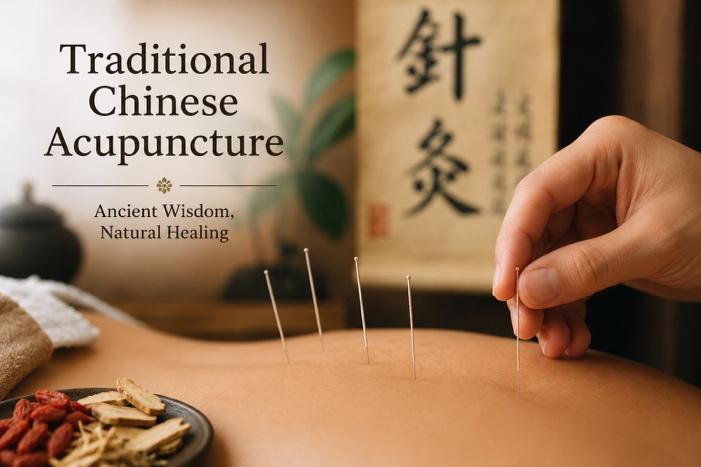
Traditional Chinese acupuncture is a therapeutic practice that has been used for thousands of years as part of Traditional Chinese Medicine (TCM). Originating in ancient China, acupuncture involves the insertion of very thin needles into specific points on the body to promote healing, reduce pain, and restore balance. Today, acupuncture is practiced around the world and is commonly used alongside modern healthcare treatments to address a wide variety of physical and emotional conditions.
The foundation of traditional Chinese acupuncture is based on the concept of Qi (pronounced “chee”), which is believed to be the body’s vital life energy. According to TCM theory, Qi flows through pathways in the body called meridians. When the flow of Qi becomes blocked or unbalanced, illness, pain, or dysfunction may occur. Acupuncture aims to restore the smooth flow of Qi by stimulating specific acupuncture points located along these meridians. Practitioners believe that balancing the body’s energy can improve overall health and encourage the body’s natural healing abilities.
During an acupuncture treatment, a trained practitioner evaluates the patient through detailed questioning, observation, and examination techniques. Factors such as sleep, digestion, stress, pain patterns, and emotional wellbeing are considered when creating a treatment plan. Thin, sterile needles are then inserted into selected points on the body. Most patients report minimal discomfort during the procedure, often describing the sensation as a mild ache, tingling, warmth, or pressure. Treatments usually last between 20 and 45 minutes depending on the condition being addressed.
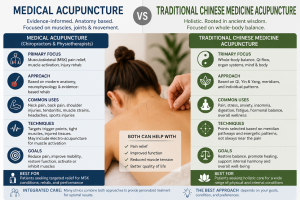
Traditional Chinese acupuncture is commonly used to help manage musculoskeletal pain such as neck pain, lower back pain, shoulder injuries, arthritis, and headaches. It is also frequently used to support stress management, anxiety, insomnia, digestive issues, and overall wellness. Many individuals seek acupuncture as a natural and non-pharmaceutical approach to healthcare. In modern clinical settings, acupuncture is often integrated with physiotherapy, chiropractic care, massage therapy, and conventional medical treatments to provide a more comprehensive approach to patient care.
Scientific research on acupuncture has grown significantly over the past several decades. While traditional Chinese explanations focus on energy flow and meridians, modern research suggests that acupuncture may stimulate the nervous system, increase blood circulation, release endorphins, and influence pain-modulating pathways within the body. Organizations such as the World Health Organization and various healthcare institutions recognize acupuncture as a beneficial treatment option for certain conditions, particularly chronic pain management.
Despite its long history, acupuncture continues to evolve in modern healthcare. Many practitioners combine traditional Chinese theories with evidence-based practices to improve patient outcomes. Safety is also an important consideration, and treatments should always be performed by properly trained and licensed professionals using sterile needles and proper clinical procedures.
In conclusion, traditional Chinese acupuncture remains an important and respected form of healthcare that combines ancient philosophy with modern therapeutic applications. Its focus on restoring balance, reducing pain, and supporting overall wellbeing has contributed to its continued popularity around the world. As interest in holistic and integrative medicine continues to grow, acupuncture will likely remain a valuable treatment option for many individuals seeking natural approaches to health and recovery.
Traditional Chinese acupuncture is a therapeutic practice that has been used for thousands of years as part of Traditional Chinese Medicine (TCM). Originating in ancient China, acupuncture involves the insertion of very thin needles into specific points on the body to promote healing, reduce pain, and restore balance. Today, acupuncture is practiced around the world and is commonly used alongside modern healthcare treatments to address a wide variety of physical and emotional conditions.
The foundation of traditional Chinese acupuncture is based on the concept of Qi (pronounced “chee”), which is believed to be the body’s vital life energy. According to TCM theory, Qi flows through pathways in the body called meridians. When the flow of Qi becomes blocked or unbalanced, illness, pain, or dysfunction may occur. Acupuncture aims to restore the smooth flow of Qi by stimulating specific acupuncture points located along these meridians. Practitioners believe that balancing the body’s energy can improve overall health and encourage the body’s natural healing abilities.
During an acupuncture treatment, a trained practitioner evaluates the patient through detailed questioning, observation, and examination techniques. Factors such as sleep, digestion, stress, pain patterns, and emotional wellbeing are considered when creating a treatment plan. Thin, sterile needles are then inserted into selected points on the body. Most patients report minimal discomfort during the procedure, often describing the sensation as a mild ache, tingling, warmth, or pressure. Treatments usually last between 20 and 45 minutes depending on the condition being addressed.
Traditional Chinese acupuncture is commonly used to help manage musculoskeletal pain such as neck pain, lower back pain, shoulder injuries, arthritis, and headaches. It is also frequently used to support stress management, anxiety, insomnia, digestive issues, and overall wellness. Many individuals seek acupuncture as a natural and non-pharmaceutical approach to healthcare. In modern clinical settings, acupuncture is often integrated with physiotherapy, chiropractic care, massage therapy, and conventional medical treatments to provide a more comprehensive approach to patient care.
Scientific research on acupuncture has grown significantly over the past several decades. While traditional Chinese explanations focus on energy flow and meridians, modern research suggests that acupuncture may stimulate the nervous system, increase blood circulation, release endorphins, and influence pain-modulating pathways within the body. Organizations such as the World Health Organization and various healthcare institutions recognize acupuncture as a beneficial treatment option for certain conditions, particularly chronic pain management.
Despite its long history, acupuncture continues to evolve in modern healthcare. Many practitioners combine traditional Chinese theories with evidence-based practices to improve patient outcomes. Safety is also an important consideration, and treatments should always be performed by properly trained and licensed professionals using sterile needles and proper clinical procedures.
In conclusion, traditional Chinese acupuncture remains an important and respected form of healthcare that combines ancient philosophy with modern therapeutic applications. Its focus on restoring balance, reducing pain, and supporting overall wellbeing has contributed to its continued popularity around the world. As interest in holistic and integrative medicine continues to grow, acupuncture will likely remain a valuable treatment option for many individuals seeking natural approaches to health and recovery.