Medical acupuncture and Traditional Chinese Medicine (TCM) acupuncture are two approaches that use acupuncture needles as part of treatment, but they differ significantly in philosophy, assessment methods, and treatment goals. While both can provide pain relief and improve function, medical acupuncture is primarily focused on musculoskeletal (MSK) conditions and muscle activation, whereas Traditional Chinese acupuncture is rooted in ancient Chinese medicine theories focused on balancing the body as a whole.
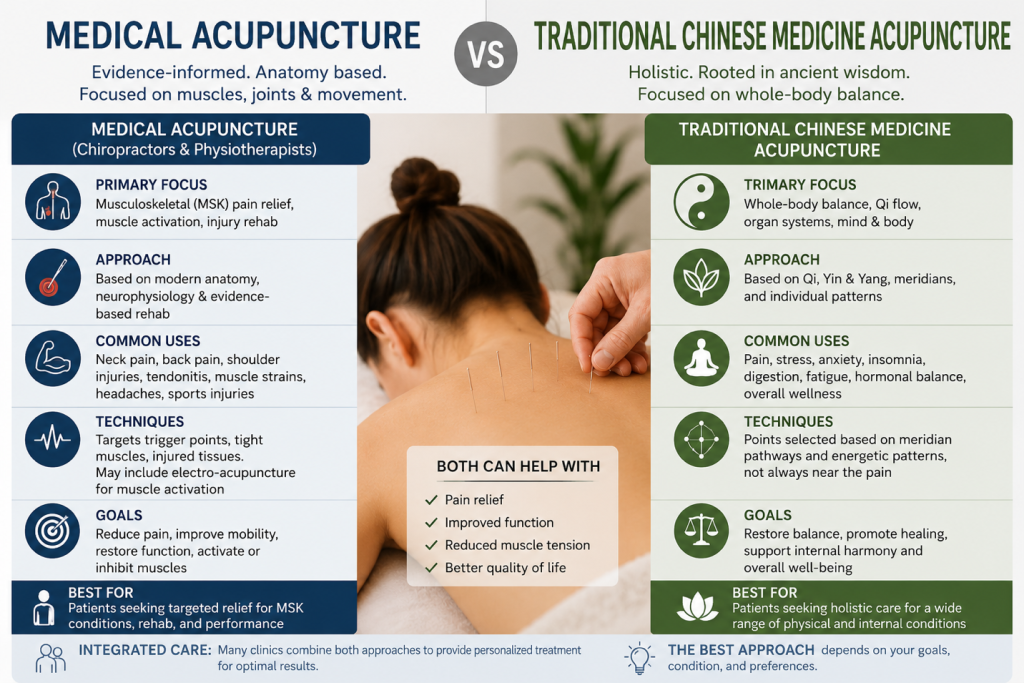
Medical acupuncture is commonly practiced by healthcare professionals such as chiropractors, physiotherapists, physicians, and other regulated practitioners. This form of acupuncture is based on modern anatomy, neurophysiology, and evidence-based rehabilitation principles. Chiropractors and physiotherapists often use acupuncture as an additional treatment tool to address muscle tension, joint dysfunction, nerve irritation, and movement impairments. The primary goal is usually pain reduction, muscle relaxation, improved mobility, and stimulation of weakened or inhibited muscles.
In a rehabilitation setting, medical acupuncture is frequently used for conditions such as neck pain, lower back pain, shoulder injuries, tendonitis, muscle strains, headaches, and sports injuries. Needles are typically inserted directly into tight muscles, trigger points, or areas surrounding injured tissues. Electrical stimulation, also known as electro-acupuncture, may also be used to activate muscles, improve neuromuscular control, and promote circulation. For example, a chiropractor or physiotherapist may use acupuncture to activate weak glute muscles, reduce muscle guarding after an injury, or decrease tension in overactive muscles contributing to poor posture or movement dysfunction.
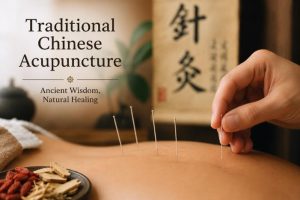
Traditional Chinese Medicine acupuncture takes a much broader and more holistic approach. TCM acupuncture is based on ancient Chinese theories involving Qi (life energy), Yin and Yang balance, and meridian pathways throughout the body. Rather than focusing solely on muscles or joints, Traditional Chinese practitioners assess the entire body system and aim to restore internal balance. A TCM practitioner may evaluate sleep quality, digestion, stress levels, emotional health, energy patterns, and tongue or pulse findings before selecting treatment points.
While TCM acupuncture can also help with musculoskeletal pain, it is often used for a much wider range of conditions including stress, anxiety, insomnia, digestive concerns, headaches, fatigue, hormonal imbalance, and overall wellness. Treatment points may not always be located directly near the painful area because practitioners choose points based on meridian relationships and energetic patterns throughout the body.
Another major difference is treatment philosophy. Medical acupuncture focuses heavily on scientific explanations involving the nervous system, muscle physiology, blood flow, and pain modulation. Research suggests acupuncture may stimulate endorphin release, improve circulation, and affect neurological pain pathways. Traditional Chinese acupuncture, however, explains treatment effects through restoring the flow of Qi and balancing organ systems within the body.
Despite these differences, both approaches can be effective and are often complementary. Many modern clinics integrate both medical acupuncture and Traditional Chinese acupuncture into patient care. Patients seeking primarily musculoskeletal relief, injury rehabilitation, or muscle activation may benefit more from medical acupuncture performed by chiropractors or physiotherapists. Individuals looking for a broader holistic approach addressing both physical and internal health concerns may prefer Traditional Chinese Medicine acupuncture.
Ultimately, the best approach depends on the patient’s goals, condition, and personal preferences. Whether focused on muscle activation and rehabilitation or whole-body balance and wellness, acupuncture continues to be a valuable treatment option in modern healthcare.